
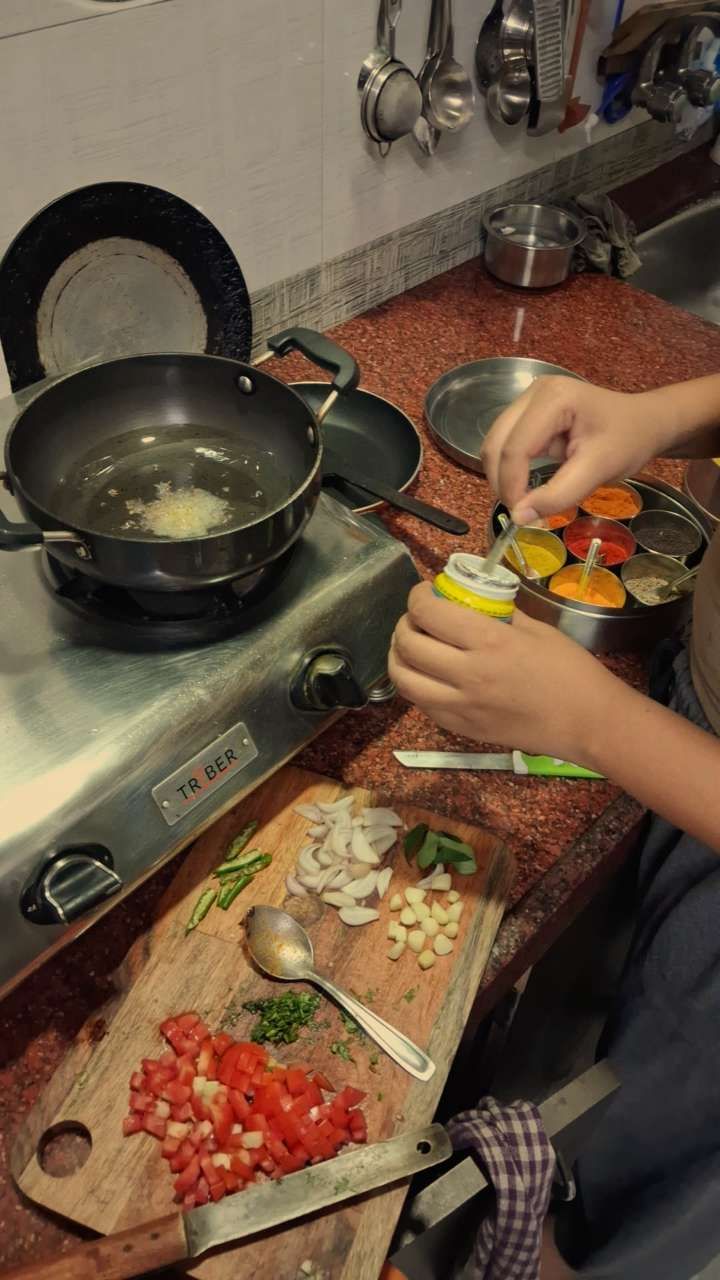
You finish one meeting, another one starts, lunch gets pushed back, and by the time work slows down you are too tired to decide what to cook.
Eating well becomes much harder when every meal requires another decision. The solution does not have to be a detailed meal plan. A few simple defaults can make busy days much easier.
Do You Need to Plan Every Meal?
No.
Some people enjoy planning meals several days ahead, but it is not the only way to eat well.
Instead, keep a few familiar meals you can rely on:
- Curd or Greek yoghurt + fruit + nuts
- Eggs + toast or roti + fruit
- Dal + rice + sabzi
- Rajma or chole + rice
- Paneer or tofu + roti + vegetables
- Chicken or fish + rice or roti + vegetables
You do not need lots of options. Even three or four reliable meals can reduce how much thinking food requires.
What Should a Simple Meal Include?
Rather than searching for the perfect recipe, look at the main parts of the meal.
The ICMR–NIN dietary guidelines encourage variety across food groups. You can build that variety from familiar meals.
Try to include:
- A protein source such as dal, rajma, chana, eggs, paneer, tofu, curd, chicken or fish
- Vegetables or fruit
- A carbohydrate source such as rice, roti, oats, bread, potatoes or millets
Not every meal needs to contain everything perfectly. The NHS Eatwell Guide considers balance across a day or week, not just one meal. This is simply a quick framework you can use at home, at work or when ordering food. For more examples, see how to build a nutrient-rich meal.
Can Convenience Foods Still Be Useful?
Yes.
Healthy eating does not require cooking everything from scratch.
The WHO’s healthy-diet guidance includes frozen and canned fruit and vegetables as options, provided they are not high in added sugar or sodium.
Useful foods to keep around might include:
- Eggs
- Curd
- Paneer or tofu
- Fruit
- Frozen vegetables
- Roasted chana
- Nuts
- Oats
- Wholegrain bread
- Packaged or canned beans
- Pre-cut vegetables
Convenience can make it easier to put together a reasonable meal when you are short on time.
What Can You Do on Really Busy Days?
Some days simply do not go according to plan.
At work, keeping fruit, roasted chana, nuts or yoghurt nearby can help when lunch gets delayed.
At home, quick meals might include:
- Eggs + toast + vegetables
- Paneer bhurji + roti
- Dal + rice + frozen vegetables
- A quick chana or rajma bowl
These meals do not need to look impressive. They only need to be easy enough that you will actually make them.
Can Food Delivery Fit Into Your Routine?
It can.
Ordering food does not mean the day has gone wrong.
When choosing a meal, ask:
- Is there a useful protein source?
- Can I include some vegetables?
- What is the carbohydrate source?
- Does the amount suit my hunger?
Dal with rice and vegetables, paneer with roti, rajma or chole with rice, or a rice bowl with protein and vegetables can all be reasonable options.
The goal is not to plan your whole life around food. It is to make eating well easier to repeat.